Liver care had the best results
Thymosin Alpha-1 Helped Some Liver Patients, Not Sepsis
Some liver blood tests improved. A large sepsis study in phase 3 found no longer lives.
Most patients reported only a sore shot site
A shot may leave a sore or red patch. That was the complaint patients made most often.
Thymosin Alpha-1 is a small protein with 28 parts. The thymus is a chest gland that makes the natural protein.
Over 1,000 patients entered the largest sepsis test in 2025. Their bodies were reacting dangerously to infection, and the drug didn't clearly save lives [3].
Most patients in studies had little other trouble. Even so, thymosin alpha-1 and its compounded preparations have no FDA approval.
Sales pages often promise far more than the studies found. The effects page helps you separate user stories from proven facts.
Thymosin Alpha-1 helps immune cells spot threats
The thymus helps train cells that fight disease. Thymosin Alpha-1 is a 28-amino-acid chain, meaning a small protein made from linked parts.
Researchers found the natural protein in a calf's thymus during 1977 [1]. Thymalfasin is the name for the man-made copy.
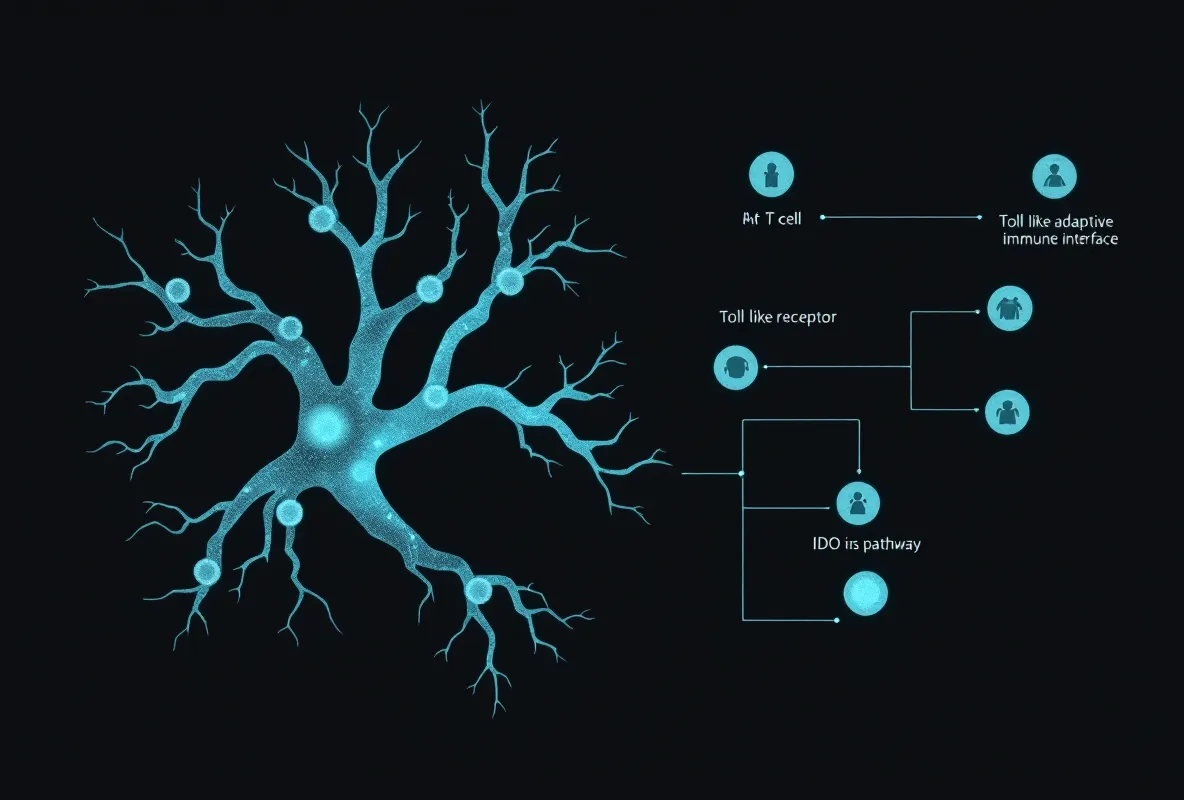
In a lab dish, the drug helped watchman cells spot germs and alert other immune cells [5]. The dish result didn't prove that any patient recovered.
Liver blood tests showed the clearest gains
The best human results came from hepatitis B, a long-term liver infection. With Thymosin Alpha-1 added, more patients had blood tests showing less active virus [9][12][13].
The drug also changed immune cells in a dish [5]. A dish can't tell us whether a patient will recover.
One study followed 76 people who were very ill with COVID-19. Deaths were 11.1% with treatment and 30.0% without it [6].
A broader 2022 review covered about 5,300 patients. Once all patients were included, the reviewers couldn't show fewer deaths [8].
The biggest sepsis test showed no clear benefit
An early test followed 361 people with sepsis, a deadly reaction to infection. Its 28-day death rates were 26.0% with the drug and 35.0% without it, a 9-point difference [2].
A larger final-stage test, called phase 3, came next. At 22 hospitals, 1,106 adults received Thymosin Alpha-1 or a placebo.
A placebo looks like the real shot but contains no medicine. The 28-day death rates were 23.4% with the drug and 24.1% with the placebo.
Researchers used those death counts to work out where the true result might lie. They were 95% sure it fell between slight help and slight harm, so the test found no clear benefit [3].
A review of cancer care also found no proof of longer life. It covered the drug and others made from thymus tissue [10].
The thymosin alpha 1 vs thymosin beta 4 page sorts out those names for you. The thymosin alpha 1 side effects page explains the known risks.
Study results can't choose your care
Some Thymosin Alpha-1 studies point to help with long-term liver infection. The largest sepsis study, though, found no proof of longer life.
The Thymosin Alpha-1 research page shows who improved and who didn't. The Thymosin Alpha-1 effects page keeps user accounts separate from those findings.
The dose page records amounts used in research. Those amounts aren't directions for you.