A sore needle mark came first
Thymosin Alpha-1 Effects Were Usually Mild
A sore shot site was common. User stories raise questions, but they don't prove cause.
A sore needle mark was the usual complaint
A needle mark may redden, itch, or hurt. Most study patients reported little other trouble from Thymosin Alpha-1.
In lab work, the drug helped watchman cells spot germs and call other immune cells [5][9]. Its best patient results came from long-term liver infections.
Some users remember catching fewer colds or getting their energy back sooner. A fair study never checked those memories.
The biggest test in deadly sepsis did not improve survival [3]. That failure matters when you weigh broader claims.
Thymosin alpha 1 benefits were clearest in liver tests
The soundest Thymosin Alpha-1 benefits came in hepatitis B care. With the drug added, more patients had blood tests showing less active liver virus [9][12][13].
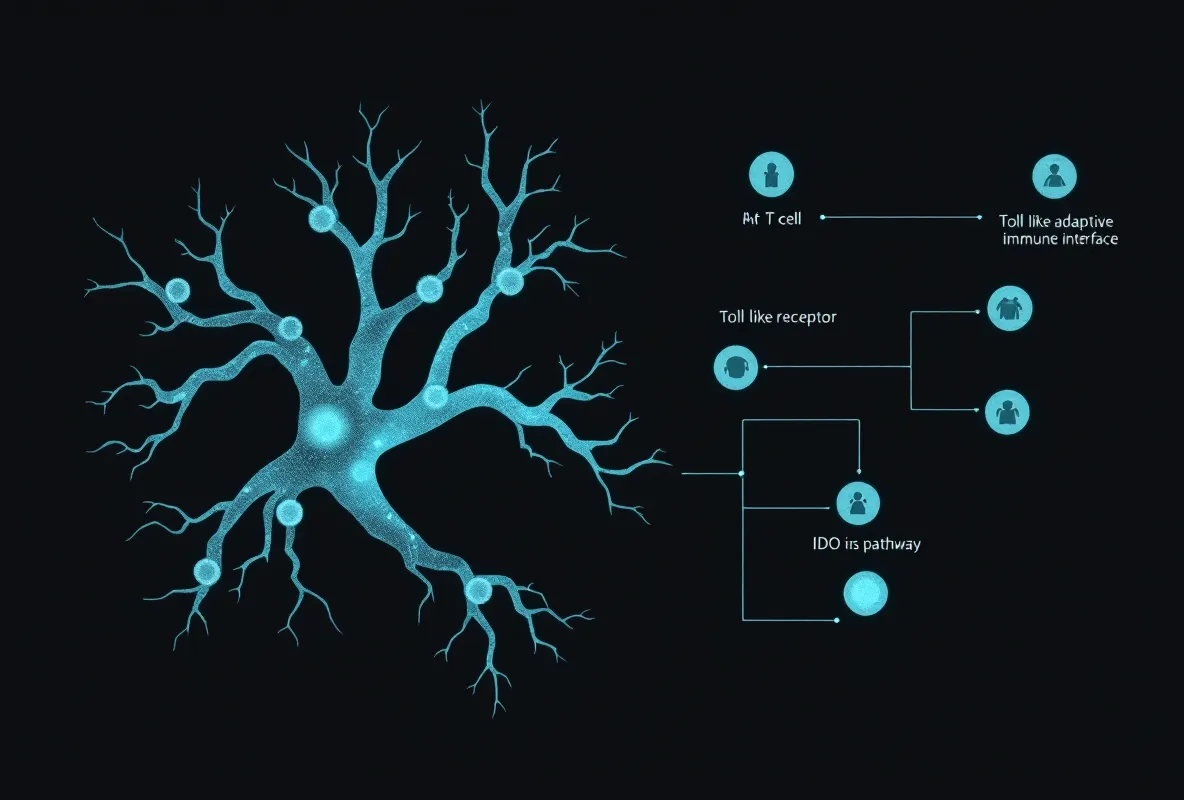
In a dish, the drug helped cells spot germs and warn other immune cells [5]. That may explain the liver result, but it doesn't prove wider claims.
Cancer doctors also tried it beside usual cancer drugs [7]. A review found no proof that drugs made from thymus tissue helped people live longer [10].
Users report help, no change, and sore skin
People who tried research-only vials wrote these comments. They are personal reports, not findings from a fair study, and no trial tested them.
Reports of help: some writers recall fewer colds or a faster return to health. Others say their energy stayed steadier after an illness.
Some writers noticed no change at all. Their reports can't tell us what happened to their immune cells.
Reports of trouble: writers most often mention soreness, redness, or itching near the needle mark. Some recall a short ache, headache, or tired spell.
People also complain about cost and access. Some fear that a research vial may not match its label.
The failed 2025 study in gravely ill patients calls for modest hopes. User accounts suggest questions, yet they don't establish that the drug works.
These stories may help you form questions for a doctor. They can't answer those questions for you.
Immune illness and transplants add concern
Thymosin Alpha-1 caused few serious problems in studies. That record doesn't make the drug right for everyone.
The needle mark is the main trouble spot: skin sometimes became red, itchy, hot, or sore. Records covered more than 600,000 patients and did not tie the drug to damaged organs at studied doses [15].
Autoimmune illness raises a concern, not a proven harm: the immune system attacks healthy tissue in this illness. Starting a stronger defense might worsen that attack, while a calming effect is also possible [14].
An organ transplant brings another concern: anti-rejection drugs quiet the immune system on purpose. Thymosin Alpha-1 could work against those drugs, though this hasn't been proved [5].
Pregnancy and breast-feeding lack good study: most patients had cancer, poor immune health, liver infection, or sepsis. The studies don't settle whether Thymosin Alpha-1 could harm a baby [4].
The largest sepsis study reached the final stage, called phase 3: it followed 1,106 adults and found no gain in 28-day survival. Each group had nearly the same death rate, so the drug showed no clear benefit [3].
US research vials pose a separate risk: Thymosin Alpha-1 has no FDA approval. A vial may be dirty, weak, or unlike its label [4].
Where evidence becomes personal
Safety context is not a treatment decision
Thymosin Alpha-1 may be generally well tolerated in studies, but its autoimmune, transplant, pregnancy, and product-quality uncertainties still require patient-specific judgment; Promise Peptides now prescribes thymosin alpha-1 at mypromise.com after its licensed U.S. clinician reviews the individual case, and that clinician can decline. Its care is for people in the U.S.; what it offers differs with the patient's state and the treatment. The compounded medicine has no FDA approval.
Other countries approved it, but the US did not
In 1977, researchers found Thymosin Alpha-1 in lab batch 5 from a calf's thymus [1]. They then listed its 28-amino-acid chain so others could make the same drug.
The man-made copy is called thymalfasin. Doctors studied it most in long-term liver infection and poor immune health.
About 35 countries later allowed uses that include hepatitis B. In the U.S., thymosin alpha-1 has no FDA approval [1].
Thymosin alpha 1 reviews can't prove a benefit
Thymosin Alpha-1 reviews range from high praise to no change. Each writer may be honest about what he felt.
A personal report still can't show what caused the change. Illness, rest, and other care may also play a part.
Fair studies carry more weight than online praise. Reviews are most useful for warnings about cost, access, or vial quality.
Thymosin alpha 1 bodybuilding claims lack proof
Thymosin Alpha-1 isn't a muscle-building drug. Studies found changes in immune cells, not new muscle growth [5].
It is often confused with thymosin beta-4, also called TB-500. That short protein is studied for tissue repair, not immune care.
The thymosin alpha 1 vs thymosin beta 4 page compares them. The record doesn't support a body-building claim.