Similar names can mislead you
Thymosin Alpha-1 vs Thymosin Beta-4: Two Separate Drugs
The first guides immune cells. The second is studied for repair after tissue damage.
The two drugs do different jobs
Two bottles may have close names yet hold different drugs. Thymosin Alpha-1 vs Thymosin Beta-4 compares two peptides, which are short proteins.
Thymosin Alpha-1 is a 28-amino-acid peptide. Its man-made drug is called thymalfasin [1].
Thymosin Beta-4, also sold for research as TB-500, is a 43-amino-acid peptide. It binds to actin, which helps a cell hold its shape while damage heals.
One drug can't replace the other. Thymosin Alpha-1 studies don't support muscle or sports claims.
Each protein has a different build
Both proteins were first found in the thymus, where immune cells learn their work. That shared home explains the word "thymosin," but not much else.
Thymosin Alpha-1 is a 28-amino-acid peptide, or short protein. Its matching man-made drug is thymalfasin [1].
Thymosin Beta-4 is a 43-amino-acid peptide. It joins with actin, a protein that supports a cell's shape.
The parts also join in a different order. Facts about either protein don't carry over to the other.
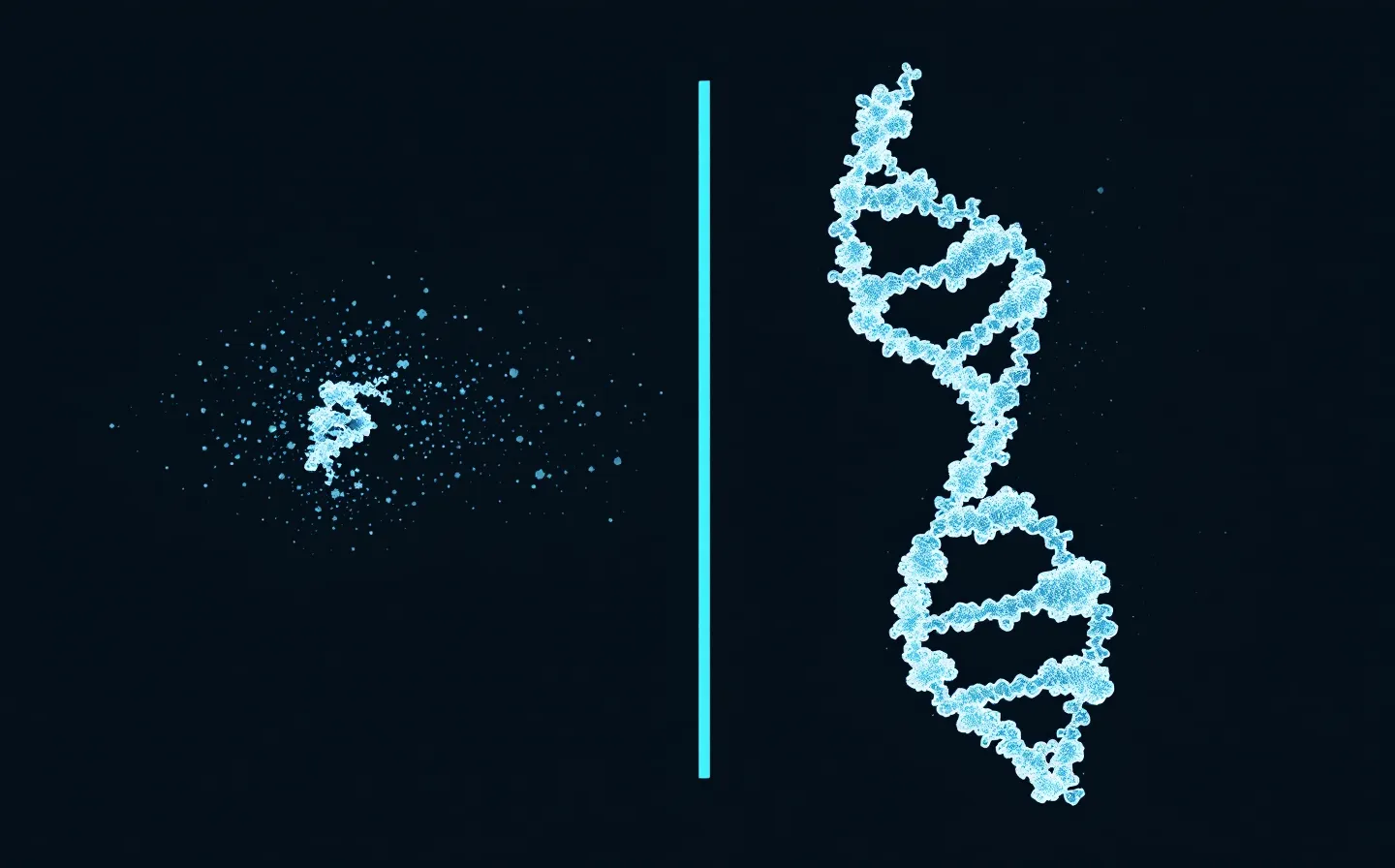
One guides immune cells; one is studied for repair
Thymosin Alpha-1 helps watchman cells spot germs and alert other immune cells [5]. Studies tried it in long-term hepatitis and beside some cancer care [9][7].
Thymosin Beta-4 works with actin, the protein that holds a cell's shape. Researchers study that tie in cell movement, new blood vessels, and wound repair.
Those jobs aren't alike. Swapping the names would point you toward the wrong drug.
The sports ban names only the repair drug
The world sports drug authority, called WADA, bans Thymosin Beta-4, or TB-500. Athletes are told not to use that drug.
The same list doesn't name Thymosin Alpha-1 as banned. Athletes still need current rules because the list can change.
A name mix-up could carry real costs. This isn't merely a spelling mistake.